Posted on

Winter Newsletter – June 2021

WINTER NEWSLETTER

JUNE 2021

ROSE PRUNING

WINTER SPRAY FOR PESTS AND DISEASES

Roses respond well to pruning. Pruning is not a difficult task if you use the right equipment and follow a few simple rules. In South Australia, pruning in July is recommended, there are a few exceptions including some old-fashioned roses and weeping standards which can be pruned after flowering in spring.

For all other roses, July is the time to remove dead or diseased branches, shorten healthy canes to promote vigorous new growth, maintain desirable size and shape and encourage better flowering.

Wear old clothes, sturdy footwear, a brimmed hat and preferably eye protection. you need good bi-pass secateurs like Felco or Fiskars, good loppers and a pruning saw. Wear all leather gloves, preferably gauntlets. A pruning saw is ideal for cuts over 2 ½ cm and removing old canes. Make sure your tools are sharp.

Felco’s instructions for sharpening, lubricating and adjusting blades are on their website https://felco.com/en_au/services/maintenance

When you approach the bush, dont bother looking at the top third to half – this will be removed. Focus on the bottom half of the plant. Ideally, you want to retain strong, healthy growth. If sufficient new canes have grown from the base (water shoots), then you can remove the old canes by sawing them off flush at the base. Look at the bottom of the plant and remove any ‘suckers’ those shoots coming from below the bud union. Also remove canes crossing over the centre of the plant. Ultimately, you want rose bush to resemble a cup shape, free of growth in the middle allowing air to circulate.

The outer rim canes should be reduced to one-third to half of their original height and cut to 7mm above an outward facing bud (eye). Remove all leaves. Ideally cut at a 45-degree angle above the bud ‘eye’ where foliage was attached. Within a few weeks the dormant bud eye will begin to swell. In another three weeks the swelling will result in a young new stem.


The right tool and equipment - Photo: Newman's Nursery
45 Degree angle above 'eye' bud

CLIMBERS AND PILLAR ROSES

Climbing roses require slightly different treatment. For climbers or pillars, first look at the base of the plant. If it has performed well, there will be a number of new canes (these are still green with no side shoots) from the base. These will provide the best flowers in the spring. Therefore, do not remove these.

Secondly, move up from the base of the plant, following older canes (left following the previous years’ pruning). Some will have strong new canes emerging partially along the old stem. Others will only have short stems along the cane. These would have produced flowers during the previous year. Determine how many stems you require. As a guide most climbers need at least 12 canes in order to wrap 6 canes onto a trellis on each side of the plant.

For a Pillar Rose, leave approximately 6 to 8 good canes growing from the base, then wrap them onto the pillar, half clockwise and the other half anti-clockwise and tie on.

Remove any remaining old foliage from the stems, fallen leaves and pruning remnants and place into green waste.

Once pruning is finished, a winter dormancy spray should be applied liberally – use pest oil, winter oil or Lime Sulphur. This will kill over-wintering aphids and spider mite eggs and fungal spores which hide in crack and crevasses on the stems and also on the ground under the rose plant. Copper Oxy Chloride spray can also be used; however, it can be detrimental to worms. The Winter Spray regime is important for pest and disease control and will ensure significantly reduced problems in spring.

FEEDING

Roses are not actively growing in winter and do not require feeding. However, roses benefit from an application of Neutrog ‘Seamungus‘. This is a soil and plant conditioner, manufactured from seaweed, fish, humid acid and manure. It stimulates the roots into strong healthy growth in late winter and early spring. Pelletised Seamungus is recommended, as pellets will breakdown with rainfall enhancing root growth and should be applied prior to mulching. 

MULCH

After old fallen leaves and cuttings have been removed, an application of mulch is recommended. Generally, late winter and before the roses begin to produce shoots which can be accidentally broken off by spreading mulch.

Knight’s Roses recommend an application of 5cm of Neutrog’s ‘Whoflungdung‘. While it can be applied immediately around the base of mature roses (3 year and older) it is advised not to apply mulch closer than 15cms to new, one or two-year-old plants as sometimes damage can occur to young basal shoots.

Whoflungdung‘ comes in 20kg compressed bales. Apply water after application to settle the mulch in. Mulch significantly reduces evaporation from the surface (spring to autumn), saving up to 40% – 50% of the irrigation otherwise required; it cools the root zone and introduces good microbial activity into the soil.

ROSE PRUNING DEMONSTRATIONS IN JUNE AND JULY

The Rose Society of SA will be conduction two rose pruning demonstrations this winter.

  1. The International Rose Garden, Adelaide Botanic Gardens on Sunday, 20 June from 12.30 – 3.30pm. It will be led by Rose Society members and participants are encouraged to bring their pruning gear so that they can practice pruning under the supervision of rose pruning experts. General rose growing advise will also be available.
  2. Roses in the Heartland RSSA Branch will be holding  their annual Rose Pruning Demonstration on Sunday, 11th July from 1pm – 3pm at 3 Para Road, Evanston (Gawler). Attendees can practice pruning under supervision.

For more information visit the Rose Society of South Australia website http://sarose.org.au

YOUR QUESTIONS ANSWERED

Q. 1. Melissa asked, “Would a climbing/rambling rose be suitable to cover a chicken coop in my yard which has little access to prune it.”

Hi Melissa, great question. Some of the old climbers or ramblers would be suitable. While you don’t have to prune them every year, it is recommended to give them a good prune every 4 – 6 years by removing very woody sections. While this seems severe, they do recover quickly. Roses such as ‘Rosa banksiae lutea‘ or ‘Lamarque‘ or ‘Climbing Pinkie‘ are possible options.

Q. 2. Janet and Sanjay asked, “I would like information on water shoots”.

Hi Janet and Sanjay, you have both asked questions about “water” or “basal shoots”. These are produced from the “bud” or “graft” union at the base of the plant providing the plant is healthy. These shoots are very important as they create the future structure of the plant and the best source of future flowering. When young, they many need a stake to protect them as they can be easily broken off by wind. Once they have flowered, these water shoots strengthen and can be trimmed or pruned. If your plant does not produce them, we suggest removing some older wood from the plant when pruning, following by applications of ‘Seamungus‘ after pruning and ‘Sudden Impact for Roses‘ in spring.

Contact Knight’s Roses for more information – phone +61 8 8523 1311 or visit our website www.knightsroses.com.au
Posted on

Autumn Newsletter – March 2021

NEW RELEASE ROSES FOR 2021 - Order your Roses early to avoid disappointment

Autumn is the time for rose lovers to select and order their new rose varieties ready for planting in June, July or August as bare-root roses. New rose cultivars at Knight’s Roses undergo several years of field trials and after rigorous and lengthy assessment only the best varieties are released.

Bare-root roses adapt readily to their new location when planted. Sites for new roses should be prepared now by applying a good compost together with Neutrog’s Seamungus pellets and GoGo Juice and regularly “dig over” the ground every month prior to planting. This will ensure the site is full of nutrients and beneficial microbes to support the newly planted rose.

KNIGHT’S ROSES INTRODUCE A COLLECTION OF NEW AGE LANDSCAPE ROSES TO APPEAL TO NATURE LOVERS

Bees’ Paradise Roses ®

These new patio/landscape roses are for professional use in parks and gardens as well as an exciting addition for home gardens. The four varieties from German rose breeder, Tantau, will delight nature lovers and create a colourful display in the garden.

These roses combine beauty, colour and the efficiency of minimal maintenance. They are ideal in mass planting, small groups, borders, rockeries, informal or traditional gardens or as a container plant. They feature almost continuous flowering and the spent flowers drop reasonably cleanly. The large clusters of single or semi-double flowers open fully to allow the pollen and nectar to be easily accessible to bees and other insects.

Award winning Bees’ Paradise Roses ® will be launched throughout Australia as bagged 2-year-old roses in winter, freshly potted 2-year-old plants in August and September and as potted roses grown from cuttings in October onwards.

Bees’ Paradise Rose® RED

This compact patio / landscape rose is very free flowering. It is easy to grow with excellent resistance to Mildew and good resistance to other fungal diseases. Deadheading is not essential but helps re-bloom and shapes the bush. It grows to 40-60cm with glossy, dark green foliage. This versatile patio rose.

Bees’ Paradise Rose® WHITE

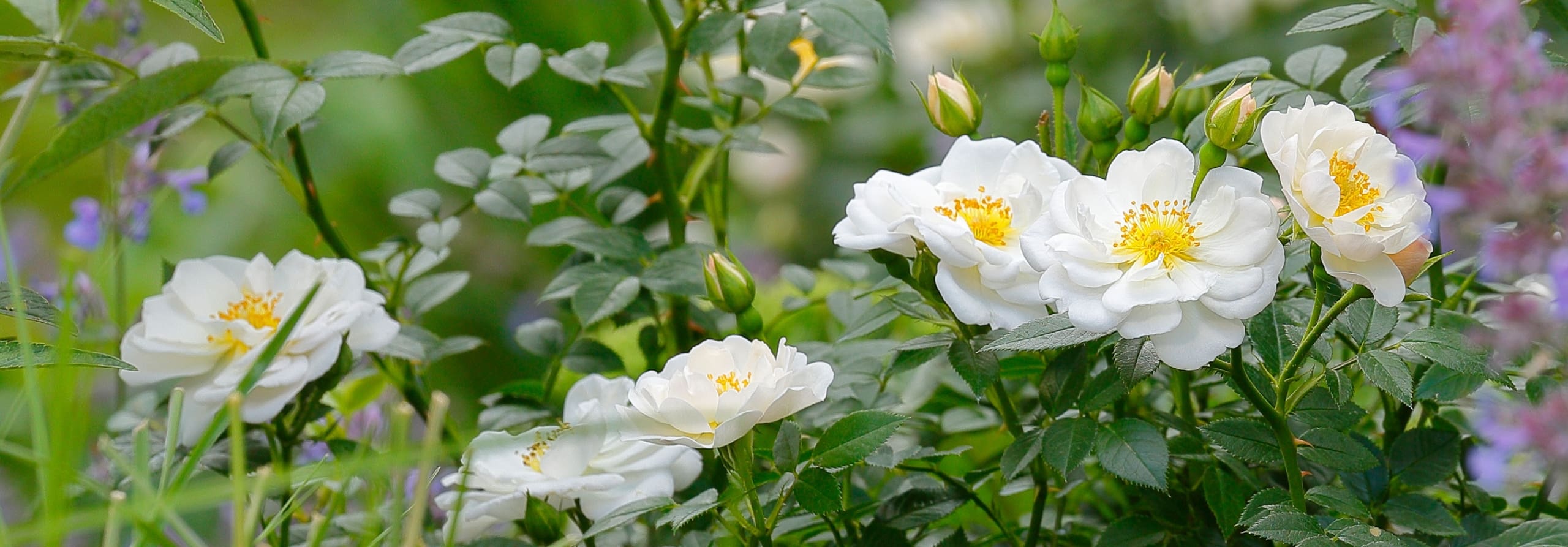
Classified as a Shrub Rose, this patio or landscape rose is very compact and free flowering. Abundant semi-double flowers are produced in clusters, starting with blush pink buds opening to pure white blooms. While deadheading is not essential, it does accelerate the next flush. This healthy, low maintenance bush grows to approximately 30 – 50cm and has excellent resistance to Mildew and good resistance to other fungal diseases.

Unconditional Love

This intensely fragrant, classic rose is a sport of the popular Hybrid Tea “Love You”. Medium pink, large pointed buds unfold to produce beautiful spiral shaped flowers with a lighter cream reverse, complemented by lush dark green foliage. Perfect for picking as a cut flower. The healthy bush is tall and upright, growing to 1.6 metres and it produces a prolific number of roses to create a beautiful display in your garden. Combining quality, beauty and fragrance, it will repeat flower throughout the growing season.

Bees’ Paradise Rose® BICOLOUR

These little gems with bright golden stamens attract bees to your garden and create a lovely display. Bees’ Paradise Bicolour features clusters of salmon pink flowers with a soft, yellow centre fading to pastel shades. The bush is 40-60cm with glossy, dark green foliage and excellent resistance to Mildew and good resistance to Blackspot and other fungal diseases. It is free-flowering, hardy and dense, ideal for any landscaping situation.

Bees’ Paradise Rose® PINK

This multi-award winning low growing shrub rose suits many landscaping situations, and is slightly more prostrate than other varieties in this collection. Clusters of semi-double pink flowers open to reveal rich yellow stamens. Easy to grow and very disease resistant to Mildew and Blackspot. It has continuous or quick repeat flowering. Deadheading is not essential, but it does help speed up the next flush and shape the bush. Grows to 60cm. Best Rose in Trial in France and Best Patio Rose in Trials in Czech Republic and Spain.

Ruby Ribbons

Ruby Ribbons is a very disease resistant, new spreading rose bred by Harkness in the UK. The blooms are fascinating with petals that are very dark red with hints of black on the edges. However, the dark colours of the petals are offset by bright centres that feature prominent yellow stamens. This is a mildly scented, compact but spreading bush (60cm high x 80cm wide) that will trail down over a low wall or the side of a pot. When grown on a flat site, the bushes produce an attractive, mounding groundcover effect without becoming too big. It is an ideal rose for garden beds or borders.

Follow Your Dreams

This classic Australian bred Hybrid Tea rose produces large, bright pink, high pointed blooms with a mild fragrance on long straight stems. It is a hardy, upright bush to 1m tall with tough disease resistant foliage. A colourful rose which produces a large number of flowers to delight home gardeners.

'Hot Pink Bonica'

This Floribunda makes an excellent landscape rose producing large sprays of small to medium sized hot pink blooms with a light fragrance and will repeat quickly throughout the season if trimmed regularly. This is an exceptionally healthy bush, ideal for mass planting. Produces hips if left unpruned in Autumn.

YOUR QUESTIONS ANSWERED:

“If I’m happy with the shape of my rose, especially my climbing roses, can I snap/cut off all the water shoots coming from the base?” – Andrea

This is not recommended. The water shoots, when mature, will replace the older canes on your rose and provide you with your best flowering option in the future.

“When spraying for aphids can you also include a liquid fertiliser in the spray so you fertilise through the leaves as well?” – Merrilyn

We would not recommend doing this. Most foliage liquid fertilisers are best applied separately to sprays which control pests and diseases.

“What is the best process to use when replacing a rose with a new one?” – Fenella

The recommended approach is:

Remove the old rose in March/April, including as many roots as possible.

Remove half a wheelbarrow of soil from this location and replace with half a wheelbarrow of soil from a place in your garden which has not had roses (e.g., your vegetable patch).

Dig in compost as well as Neutrog’s Seamungus pellets and GoGo Juice.

Dig over monthly with additional Seamungus and GoGo Juice.

Plant your new rose in June or July.

Posted on

Summer Newsletter – December 2020

SUMMER NEWSLETTER

DECEMBER 2020

Rose field at Knights Roses

In a year like no other, 2020 has been simply devastating for many people and businesses. We will remember these times for many years to come. Due to increased consumer demand for roses and renewed interest in gardening, Knight’s Roses experienced unprecedented rose sales in 2020. During the year many people spent more time in their gardens, helping them both mentally and physically. 

We thank our loyal customers for their continued support and eagerly look forward to 2021. We wish you all Season’s Greetings.

ROSE GROWING TIPS FOR THE SUMMER SEASON

Summer proofing your garden mainly relies on your watering regime. High temperatures generally mean lots of sunshine and high Ultra-violet light readings and low humidity. This creates high evaporation rates – hence the need to water. 

We know we will quickly dehydrate without drinking lots of water. The rose plant is similar. If the plant looses its foliage which, like clothes, protect its branches, its limbs will burn. Once burnt, the stems never recover. They will either die completely or only deliver part of the food/water the new foliage requires. They should therefore be removed in winter.

Young standard roses and weeping roses have green ‘standards’ (or stems), that is the root stock onto which the roses has been grafted. It is important that supporting stakes are located on the north west side of the ‘standard’ to shade the stem in its first two years of development. Once the standard goes grey-brown and develops bark as it matures, it no longer needs sun protection. If your stake is already on the south side of the plant, wrap some shade cloth or old Terylene curtain loosely around the new standard to protect it.

MULCH

Due to low rainfall, low humidity and high temperatures, both the transpiration rate of the rose and the evaporation rate from the soil are very high. Ensure you water deeply and if you’ve not already done so, apply an organic-based mulch. The Rose Society recommends Neutrog’s ‘Whoflungdung‘ super mulch. This product helps to keep the ground cooler, reduce evaporation, helps control weeds and improves the soil. A good layer, up to 10cm, can reduce your water usage by 40-50%

WATERING

Assuming the roses are mulched, a rose plant required 20 to 30 litres of water, in one application, per week (for each rose) if the average maximum temperature for the next 7 days is 20°C – 30°C. If the average maximum temperature for the next 7 days is in the rage 30°C to 40°C, the rose will require at least 30 litres of water in one application that week. Finally, is the average maximum temperature is 40°C or above, the rose will require 40 litres of water, in two applications of 20 litres for the week. the extreme heatwave conditions with an average weekly maximum over 40°C is rare but does occur in warmer regions of the state. Roses in their first year may require supplementary water in addition to that described above as young plants can dry out more quickly.

FEED HUNGRY PLANTS

A feed of Neutrog’s Sudden Impact for Roses will ensure that your roses have sufficient nutrients to flower throughout summer. the timing will generally be around late December. Apply GOGO Juice monthly to help increase the microbial population in your soil, and make more nutrients available to plants.

Apart from watering and mulching, the rose requires little other maintenance in summer as the air is too dry for fungal problems and generally too hot for insects. If these do occur, use organic solutions such as Eco-oil

REMOVE SPENT BLOOMS

Finally, regularly remove spent blooms by cutting the old flower and short stem down to the second five-leaflet to ensure continuous flowering. Simply plucking the old bloom without some of the stem can result in weak growth. We can have continuous, disease free and flourishing roses if you follow these simple steps. 

Deheading a Rose
Deheading a Rose

TRY SOME STANDARD ROSES

Why were standard roses invented? That’s a good question and there’s a very interesting answer. 

‘Standard’ roses were developed in the late 18th century in Europe, possibly Germany. By the early 19th century there were several nurseries in Germany that specialised in providing the root stock to propagate standard roses. 

Standard roses were extensively grown in France and England, gaining popularity in the Victorian era where they were featured in the gardens of stately homes. The name “rose standards” originated there, and later became the”standard” rose. It is thought that standard roses were introduced to allow ladies wearing fashionable crinoline dresses to move more easily around the formal rose garden.

Queen Louise's Teahouse in Denmark, circa mid-1800s, showing renovated rose garden. The Queen was passionate about her roses.

Standard roses are useful as architectural or structural plants and the most popular of these is the tall (90cm) standard rose. These are grafted onto stems of understock. They add height to the garden, define pathways and their straight single stem and circular crown suit formal gardens. Smaller plants with light surface roots (such as annuals) can be grown underneath. There are many standard roses available and they come in a fantastic range of colours and many have beautiful perfume. 

Some of the most famous Standard Roses are the all-time favourtie Iceberg, Angel Face, Bonica, Seduction, Friesia and Gold Bunny. These make ideal standards, as the canopy is compact with prolific flowering. 

New releases such as Hot Pink Bonica, Brilliant Pink Iceberg and Ebb Tide also come as (90cm) Standards and are highly recommended. Our top selling Patio Standard (70cm) are Black Caviar, Firestar, Ebb Tide and Aussie Magic.

‘Iceberg’ thought to be the worlds best rose, simply because it performs beautifully. ‘Iceberg’ has dainty white blooms with a pleasant fragrance. It has two main flower flushes in spring and autumn, but also flowers throughout the year, even in winter. The foliage is healthy and hardy. When grown as a standard, ‘Iceberg’ looks great, forming a substantial and well-shaped crown.

Tall (90cm) Iceberg Standards in Spring

‘Seduction’ is a very pretty rose with wavy ivory petals gently deepening to pale pink on the edges. The medium-sized blooms last exceptionally well when cut.

‘Gold Bunny’ flowers almost continuously. It has medium-sized, clear yellow blooms, and  soft green, disease resistant foliage.

‘Friesia’ is one of the best floribundas with clusters of deep yellow blooms and a sweet fragrance. A compact and bushy growth habit with healthy bright green foliage. 

‘Bonica’ has pastel pink blooms produced in large clusters. The foliage is dark green ad healthy. Prolific flowering creates a great display throughout the growing season.

'Bonica' Bred by Meilland in France

QUESTION TIME!

Do you have a question for our experts?

Please send us your questions for our experts to provide advice. We will select one or two of the best questions and answer it in each newsletter. If yours is selected, you will receive a free rose from Knight’s Roses.

Contact Knight’s Roses for more information – phone 08 8523 1311 or email: retailsales@knightsroses.com.au or visit our website www.knightsroses.com.au

Posted on

Spring Newsletter – September 2020

SPRING NEWSLETTER

SEPTEMBER 2020

roses-et-pique-prix-Knights-Roses

Rose Growing Advice

As we say goodbye to winter, we welcome the beginning of spring!

The COVID19 pandemic has challenged all of us but also allowed us to enjoy the simple things in life, in particular spending time in our gardens. In fact, during the past six months garden centres and rose nurseries have experienced an unprecedented growth in sales! We have been extremely busy endeavouring to keep up with demand for roses through winter.

People have rediscovered the joy of cultivating beautiful gardens and growing gorgeous roses. Its peaceful and therapeutic strolling around a rose garden and very rewarding  picking a bunch of your home-grown roses to take inside.

Here are come top tips for growing roses:

  1. By now, you should have finished pruning and new shoots will be appearing on your rose plants with the usually warm start to spring.
  2. Give the roots “a boost” by  applying a soil tonic or root stimulant, such as Neutrog Seamungus. This seaweed-based soil and plant conditioner, recommended by Rose Societies, stimulates and supports root growth and development. It is also ideal for establishing new plants, particularly bare-rooted roses.
  3. We recommend fertilising with Neutrog Sudden Impact for Roses when the new rose shoots are about 2cms long. Water the fertiliser in after application or, better still, apply prior to forecast rain. This fertiliser is specifically tailor-made for roses and has a high potash content to assist in boosting flowering and offering improved disease tolerance.
  4. Mulch your rose garden. The benefits of applying mulch include:
  • Weed suppression
  • Reducing the amount of evaporation and watering needed
  • The mulch breaks down and adds organic material into the soil
  • The introduction of beneficial bacteria
  • Encouraging earthworms that aerate the soil
  • Regulates soil temperature
  • helps to prevent erosion from heavy rain

We and the Rose Society recommend Neutrong ‘Whoflungdung‘ organic mulch. It is a biologically activated, nutrient rich, weed free, absorbent super mulch. Apply the mulch in late winter or early spring, according to the manufacturer’s directions. Remember to keep the mulch away from the actual base of young roses in case it burns.

5. Watering – It is important to water your established roses with one good soak per fortnight as we have had a very dry spring. Roses in their first year may require supplementary water as their roots are not fully established and the young plant can dry out more quickly than well-established plants.

6. If your plants are healthy, you will see strong water-shoots emerging from the base of the plant. These are typically rapidly growing and soft. They may need staking to prevent them from snapping off in strong winds

Neutrog's Seamungus, Sudden Impact for Roses and Whoflungdung
Freshly applied Neutrog Mulch - over the garden bed and watered in

Question Time!

Do you have a question for our experts?

Please send us your questions for our experts to provide advice. We will select one or two of the best questions and answer it in each newsletter. If yours is selected, you will receive a free rose from Knight’s Roses.

Contact Knight’s Roses for more information – phone 08 85231311 or email: retailsales@knightsroses.com.au or visit our website www.knightsroses.com.au 

Posted on

Autumn Newsletter – May 2019

AUTUMN NEWSLETTER

MAY 2019

roses-et-pique-prix-Knights-Roses

Now is the time to select and order the roses you wish to plant this June, July or August as bare root roses.

From experience, bare root roses do adapt readily to their new sites when planted. These sites for new roses should be prepared now by applying a good compost together with Neutrog’s Seamungus and GoGo Juice and regular “digging over” every month prior to planting. This will ensure the sire is full of the nutrients and good microbes it needs to support the newly planted rose.

Knight’s Roses have released some great new varieties this year and we hope you can find room in your garden for some of these.

Our new releases include: Winx ™

Proudly supporting The National Jockeys Trust, a charitable trust established in 2004 for the purpose of providing funds to jockeys and their families left in hardship, especially due to severe injury or death.

The Winx rose is a tribute to the great champion – the world’s best racehorse. Between May 2015 and her retirement in April 2019, Winx won 33 consecutive races including 25 group 1’s, at distances raging from 1300 metres to 2200 metres. In 2017, she was inducted into the Australian Racing Hall of Fame, only the third horse to earn this honour while still in training. The Winx rose is impressive just like the mare. A vigorous, low growing Shrub rose, it produces small clusters of 305 fully double, creamy white flowers. The flowers are retained for a long time on the bush and the healthy, dark green, glossy foliage creates an excellent contrast to showcase the flowers. Winx is ideal for many garden landscaping situations including bedding and borders. The bushy growth habit, reaching approximately 80cm tall, makes this rose a perfect choice as a ground cover or container plant. 

WINX stages of bloom and foliage (002)

Guy's Gold

A rose that deserves a prominent position in your garden. ‘Guy’s Gold’ produces a large number of bold canary yellow blooms which hardly fade at all. The pointed buds open into round decorative blooms, up to 12cm wide, which sit proudly above the dark shiny leaves. It is one of the earliest roses to bloom in the season and remarkably quick to repeat.

The plant is erect and densely branched with bushy, even growth. With its long flowering season and lovely bright display in the garden, Guy’s Gold is suitable for use in beds, borders or low hedges and fantastic for cutting stems to take indoors.

Bred by Robert Harkness and named to commemorate the Guy’s Hospital Nurses’ League in the UK.

Notre Dame Du Rosaire ™

Translated as ‘Our Lady of the Rosary’, this rose has an unsual colour for a Rosa Generosa variety from Guillot Roses in France. It has inherited its Old World garden rose shape, but has the contemporary look of new shrub roses. The bush produces abundant bouquets of fragrant blooms, 8cm in diameter, in an attractive blend of orange and pink. The bush has very healthy, glossy leaves with excellent disease resistance, repeat flowering and growth habit to approximately 80cm which makes this plant ideal for small gardens and borders. This rose is a great performer with a good holding life in the vase and looks beautiful in the garden.

The SACWA Rose™

The SACWA Rose™ is a classic Hybrid Tea which produce dark, velvety red flowers with a moderate sweet rose fragrance. From Rosen Tantau in Germany, this rose was bred to be vigorous and healthy with excellent resistance to Mildew and Black Spot.

Individual flowers are 8-10cm wide, creating large, round blooms when completely open. The plant produces plenty of basal shoots and has regular flushes of flowers throughout the growing season. The bush grows to approximately 1.2m – 1.5m tall, making it ideal for use in the rose beds or planted in small groups for more impact. The large, rain resistant flowers make a particularly good cut flower with a long vase life.

The South Australian Country Women’s Association (SACWA) is a not-for-profit organisation serving the community since 1929. The organisation is made up of volunteers who work to improve the welfare and conditions of life of women and children, of all ages, whether in the city or country. SACWA is celebrating its 90th anniversary in 2019, and this rose will be used to raise funds for programs that support rural aid for farmers across Australia.

Dolly's Dream™

Dolly’s Dream™ is a stunning, fragrant, burgundy coloured rose to celebrate the life of Amy “Dolly” Everett. This beautiful Shrub Rose from Rosen Tantau’s Nostalgic Collection features large, cup shaped flowers produced in small clusters of 3-5 blooms on strong stems. It is an attractive deep purple colour in warm weather changing to a more intense burgundy on cooler days. Typical of a Nostalgic Rose, Dolly’s Dream™ has a lovely strong fragrance showing an oriental character and repeat flowers extremely well. This is a very healthy, bushy rose with a well branched habit and abundant semi-glossy foliage with good disease resistance. Also suitable as a cut flower.

Knight’s Roses will pay a royalty from the sale of this rose to the Alannah & Madeline Foundation. The Foundation supports programs that focus on protecting children from violence and creating behaviour changes in the community to reduce bullying and cyber bullying.

To order these roses either contact our office by phone (08) 8523 1311, email retailsales@knightsroses.com.au or visit our website and order them online.

We look forward to your feedback on how these roses perform in your garden incoming years.